
Course Content
IN THIS LESSON
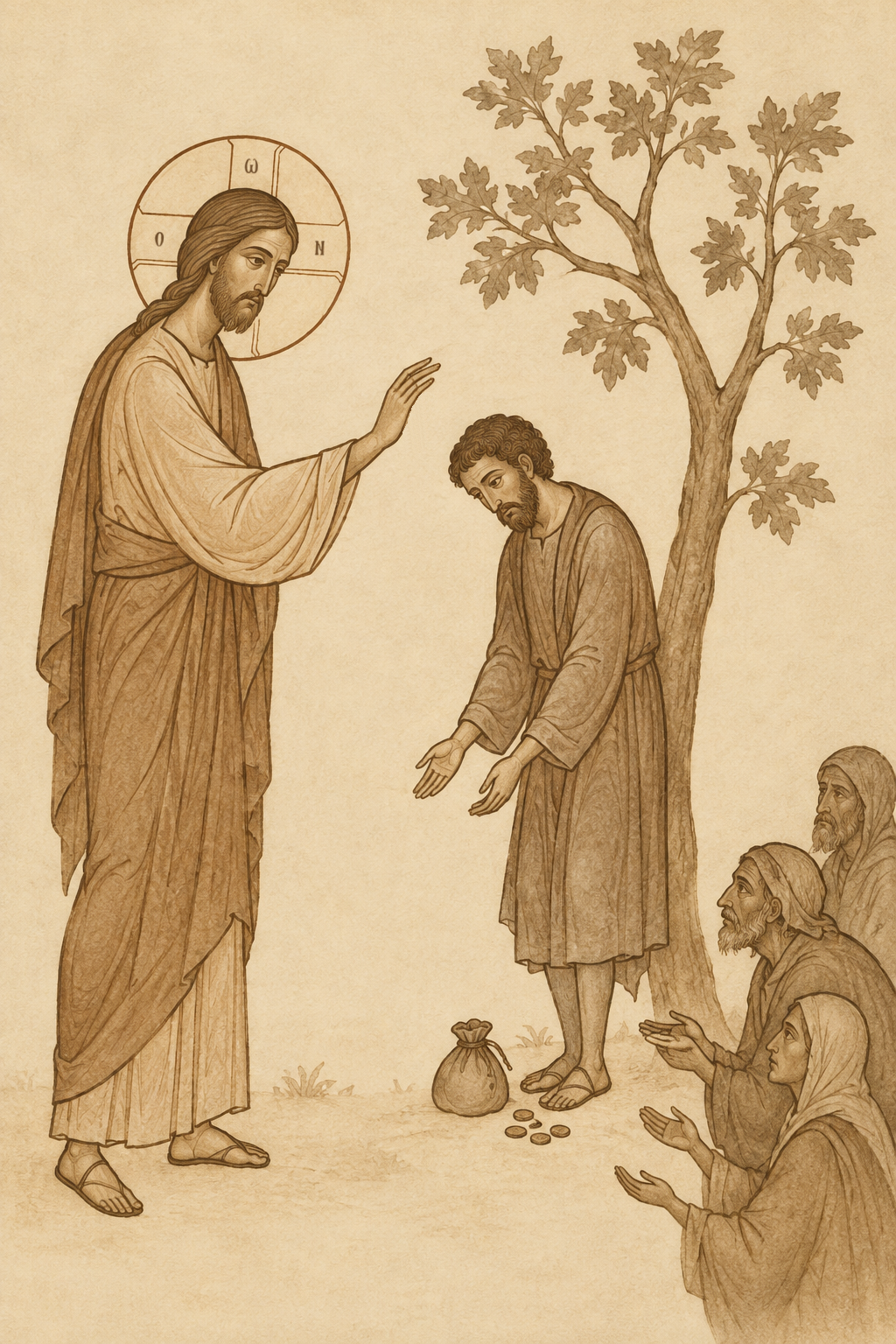
1. The Gospel’s first response
Christ’s call
The Gospel summons human beings to repent and believe.
Repentance and faith are not optional advanced practices for especially devout Christians. They are the foundational human response to God’s saving work in Jesus Christ.
Repentance turns the heart away from sin, self-rule, false worship, and destructive passions.
Faith turns the heart toward Jesus Christ: trusting Him, confessing Him as Lord, receiving His mercy, and living in obedience to Him.
The two belong together. Repentance without faith can become despair, shame, or self-improvement. Faith without repentance can become empty assent, sentiment, or presumption.
Salvation is received, not earned
No person earns salvation through religious effort, moral achievement, knowledge, family background, ethnicity, or cultural identity.
Salvation is the gift of the Holy Trinity, accomplished by Christ and communicated through the Holy Spirit in the Church.
Repentance and faith are not ways of paying God back; they are the freely given human response to divine grace.
The Christian life is therefore neither self-salvation nor passivity. It is active cooperation with grace.
2. Repentance: a return of the whole person
Meaning of metanoia
The usual New Testament term for repentance, metanoia, means a change of mind, heart, direction, and way of life.
It includes sorrow for sin, but it is more than emotion. A person can feel regret yet remain attached to the same sinful patterns.
Genuine repentance recognizes sin truthfully, rejects self-justification, turns to God, and begins concrete change.
Repentance is not self-hatred. It is a return to the God who created, loves, heals, and restores the person.
What repentance includes
Recognition: acknowledging sin as sin rather than renaming it, minimizing it, blaming others, or calling it necessary.
Contrition: sorrow for having wounded communion with God and neighbor.
Confession: bringing sin into God’s light, personally in prayer and sacramentally in confession.
Renunciation: rejecting sinful actions, habits, relationships, rationalizations, and occasions that repeatedly lead to sin.
Conversion: choosing concrete obedience, reconciliation, restitution, and a life more aligned with Christ.
Perseverance: returning to God after falls and refusing both complacency and despair.
Repentance is lifelong
Baptism marks a decisive break with the old life, yet repentance continues throughout Christian life.
Even mature Christians repent because they increasingly see the subtle forms of pride, selfishness, resentment, vainglory, fear, distraction, and lack of love within themselves.
The goal is not anxious self-monitoring. It is growing humility, clarity, gratitude, and readiness to receive God’s mercy.
A Christian’s last breath should be marked by the same posture as the beginning of Christian life: “Lord, have mercy.”
3. Faith: trust, confession, and faithfulness
Faith is more than belief that God exists
Biblical faith includes assent to the truth God reveals, but it is not only intellectual agreement.
Even acknowledgment of correct doctrine is insufficient when it remains detached from obedience, worship, repentance, and love.
Faith is personal trust in the living God: entrusting one’s life, future, body, relationships, possessions, fears, failures, and hopes to Jesus Christ.
It involves fidelity—remaining loyal to Christ in adversity, temptation, uncertainty, and suffering.
The content of Christian faith
Faith has a definite content. Christians trust the God who has revealed Himself as:
The Holy Trinity: Father, Son, and Holy Spirit
The Creator of all things visible and invisible
Jesus Christ, the eternal Son of God made man
The Savior who died, rose, ascended, reigns, and will come again
The giver of the Church, sacraments, forgiveness, resurrection, judgment, and eternal life
The Creed is the Church’s concise baptismal confession of this faith.
Christian faith is not an undefined spirituality that can be reshaped around personal preference; it receives and confesses what God has revealed.
Faith and obedience
Faith bears fruit in action. Trusting Christ means taking His commandments seriously.
Obedience does not compete with grace; it is the living expression of faith and love.
Works of mercy, forgiveness, purity, truthfulness, prayer, generosity, and endurance do not purchase salvation. They show that faith is alive.
A faith that habitually refuses repentance or excuse-making cannot be separated from the life a person actually lives.
4. Grace and human freedom
God acts first
God’s mercy precedes human repentance. He seeks the lost before they seek Him.
The Holy Spirit convicts persons of sin, gives the desire to turn, strengthens the will, and makes faith possible.
Christ’s Cross and Resurrection are the foundation of forgiveness and new life.
A person never repents in isolation from God’s initiative; even the ability to return is a gift of grace.
Synergy
Orthodox Christianity speaks of synergy: cooperation between God’s grace and human freedom.
Grace is not an impersonal force, and human freedom is not erased by God’s action.
God calls; the human being must answer. God forgives; the human being must receive forgiveness and turn from sin. God gives power; the human being must cooperate through prayer, obedience, sacramental life, and perseverance.
Synergy avoids two opposite errors:
Self-reliance: imagining that virtue or salvation can be achieved through willpower apart from grace.
Spiritual passivity: imagining that grace makes human choices, discipline, repentance, and obedience unnecessary.
5. Repentance and sacramental life
Baptism: the beginning of new life
In baptism, a person dies and rises with Christ.
Baptism is a decisive renunciation of Satan, sin, and the old way of life, followed by union with Christ.
The baptized person confesses faith in the Holy Trinity and receives a new identity as a member of Christ’s Body.
Baptism is not merely a public symbol of an inward decision; it is a sacramental participation in Christ’s death and Resurrection.
Chrismation: the gift of the Spirit
In chrismation, the Church seals the baptized person with the gift of the Holy Spirit.
The Spirit strengthens the person to live the Christian life, to grow in faith, and to bear witness to Christ.
Faith is therefore not maintained by private determination alone. It is sustained by the Spirit within the Church.
Confession: renewed repentance after baptism
Christians continue to sin after baptism and need ongoing reconciliation.
Sacramental confession brings sins truthfully before Christ in the presence of the priest, who acts as witness, pastor, and servant of Christ’s forgiveness.
The purpose is healing, restoration, spiritual counsel, accountability, and renewed communion—not humiliation or mere legal record-keeping.
A good confession is concrete, honest, brief enough to remain focused, free from blaming others, and joined to an intention to change.
Eucharist: communion and strengthening
The Eucharist is communion with the crucified and risen Christ.
It strengthens believers for repentance, unites them to Christ and one another, and nourishes growth in holiness.
Preparation for Communion includes prayer, fasting according to one’s rule, reconciliation, self-examination, and seeking forgiveness.
The Eucharist is not a reward for moral perfection; it is medicine for those who repent and seek healing.
6. Obstacles to repentance and faith
Pride and self-justification
Pride resists repentance by treating the self as incapable of error or above correction.
Self-justification excuses sin, shifts blame, compares oneself with “worse” people, or reframes wrongdoing as virtue.
Humility tells the truth about the self without denying God’s mercy.
The tax collector’s prayer—“God, be merciful to me, a sinner”—models repentance without self-display.
Despair and shame
Despair says that sin is greater than God’s mercy or that change is impossible.
This is not true repentance. It can become a subtle form of pride because it makes one’s failure more decisive than Christ’s saving power.
Shame can alert a person to sin, but unhealthy shame says, “I am beyond love and cannot return.”
Christian repentance says, “I have sinned; therefore I will arise and go to the Father.”
Presumption
Presumption misuses divine mercy as permission to remain unchanged.
It says, “God will forgive me anyway,” while refusing to struggle, repair harm, or abandon sin.
Genuine trust in God’s mercy increases the desire for holiness; it does not reduce moral seriousness.
Fear and worldly attachment
Fear of losing comfort, social approval, money, a relationship, control, or a cherished habit can delay repentance.
Faith teaches that Christ is more trustworthy than the securities people cling to.
Repentance often includes practical sacrifice: ending destructive habits, making restitution, admitting wrongdoing, seeking help, or changing one’s environment.
7. The fruits of repentance and faith
Forgiveness and peace
Repentance opens the person to receive forgiveness already offered in Christ.
Forgiveness restores communion with God and begins to heal the wounds caused by sin.
Peace is not necessarily immediate emotional relief; it is reconciliation with God and a growing stability in His mercy.
Humility and compassion
A repentant person becomes less eager to condemn others because he or she knows personal need for mercy.
True repentance produces compassion, patience, gratitude, and gentleness.
Judgmentalism, spiritual superiority, and delight in others’ failures are signs that repentance has not yet penetrated the heart deeply.
Freedom from the passions
Repentance gradually weakens the power of sinful habits and disordered desires.
Faith redirects desire toward God, making a person more capable of love, chastity, generosity, courage, and self-control.
Growth is often slow and includes setbacks. Steadfast return to God is itself a sign of life.
Joy and hope
Repentance leads not to permanent gloom but to joy.
The joy of salvation arises from being found, forgiven, restored, and welcomed by God.
Faith gives hope because the final truth of the Christian life is Christ’s Resurrection, not personal failure or death.
8. A practical rule of repentance and faith
Daily practice
Begin and end the day with a short prayer of thanksgiving, confession, and trust: acknowledge God’s gifts, name failures honestly, ask mercy, and entrust the next day to Christ.
Read a small portion of Scripture daily, especially the Gospels, and identify one command or example to practice.
Practice prompt repentance: if you speak harshly, lie, indulge anger, refuse charity, or act selfishly, turn back immediately rather than letting the sin harden into habit.
Ask forgiveness when you have harmed someone, without adding excuses or demanding that the other person immediately respond as you want.
Keep a simple, honest examination of conscience focused on concrete patterns rather than obsessive self-analysis.
Prepare regularly for sacramental confession with humility and without hiding serious sin.
Participate faithfully in Divine Liturgy and receive the Eucharist according to the guidance of your priest or spiritual father.
Faith in difficult times
When certainty, comfort, or emotions are weak, faith may consist in continuing to pray, attend worship, obey known commandments, and refuse despair.
Faith is not measured by intensity of feeling. It is shown in fidelity to Christ when feelings fluctuate.
Doubts should be brought into prayer, Scripture, worship, and wise pastoral conversation rather than concealed or treated as a reason to abandon the Christian life.
The prayer “Lord, I believe; help my unbelief” is an honest expression of faith seeking healing.
9. Scripture for study
Psalm 32; Psalm 51; Psalm 130 — Confession, forgiveness, cleansing, and hope
Isaiah 1:16–20; 55:6–9 — Turning from sin and God’s abundant mercy
Ezekiel 18:21–32; 36:24–28 — The call to turn and receive a new heart
Joel 2:12–17 — Returning to God with the whole heart
Matthew 3:1–12; 4:17 — John the Baptist and Christ’s call to repentance
Matthew 6:9–15; 7:21–27 — Forgiveness, obedience, and living faith
Matthew 18:21–35 — Receiving and extending forgiveness
Mark 1:14–15; 9:14–29 — Repentance, faith, and “help my unbelief”
Luke 7:36–50; 15:1–32; 18:9–14; 19:1–10 — Forgiveness, the lost, humility, and conversion
John 3:1–21; 6:35–40; 20:24–31 — New birth, trust in Christ, and confession of faith
Acts 2:37–42; 3:19–21; 16:25–34 — Apostolic preaching, baptism, repentance, and faith
Romans 3:21–31; 5:1–11; 6:1–14; 10:9–17 — Grace, reconciliation, baptismal life, and confession
2 Corinthians 7:8–11 — Godly grief and repentance leading to life
Galatians 5:16–26 — Life in the Spirit and its fruit
Ephesians 2:1–10; 4:17–32 — Grace, new life, and putting away the old ways
Hebrews 11:1–16; 12:1–3 — Faith, endurance, and fixing the eyes on Christ
James 2:14–26 — Faith that works through love
1 John 1:5–2:2 — Confession, cleansing, and Christ our advocate
Questions for reflection
How do repentance and faith correct one another when they are held together?
What is the difference between temporary regret, self-condemnation, and genuine metanoia?
What sins or habits am I most tempted to rename, excuse, minimize, or blame on someone else?
Where might pride, fear, attachment, or shame be preventing a concrete return to God?
How does faith involve more than believing certain facts about Jesus?
Why does Orthodox teaching reject both self-salvation by effort and passive waiting for grace to change us without our cooperation?
What does a sincere sacramental confession look like in practice?
How can a person distinguish true humility from despair?
Which spiritual practice—prayer, Scripture, forgiveness, fasting, almsgiving, confession, or Eucharistic participation—would most directly support a current need for repentance?
What specific, achievable step could make faith more visible in your life this week?