Course Content
IN THIS LESSON
Session 3: Sin
1. What sin is
More than breaking rules
Sin is any thought, desire, word, action, or settled disposition that turns a person away from God and contradicts His will.
At its deepest level, sin is a rupture of communion: it is failure to love God with the whole person and to love one’s neighbor rightly.
Sin is not merely violating an external religious rule. God’s commandments reveal reality: they direct human beings toward the life for which they were created.
Therefore, sin is self-destructive. It does not injure God as though He were fragile; it wounds the sinner, harms others, darkens the mind, disorders desire, and weakens the person’s capacity for love.
Sin as a spiritual illness
Orthodox Christianity often describes sin therapeutically, as a disease of soul and body needing healing.
This does not deny personal guilt or responsibility. A person really chooses and commits sins; however, sin also creates bondage, habits, wounds, and distortions that require healing through grace.
The Church is understood as a spiritual hospital: Christ is the physician, the sacraments are healing gifts, and spiritual guidance helps diagnose and treat destructive passions.
Repentance is therefore not only regret after wrongdoing. It is a return to God, a reorientation of the whole person, and the beginning of restoration.
Sin and death
Sin is joined to death and corruption. Humanity’s alienation from God, the Source of life, results in spiritual death and bodily mortality.
Fear of death often fuels further sin: people seek false security, control, pleasure, power, approval, or possession in an effort to protect themselves.
Christ comes to overcome both sin and death, not simply to offer moral advice.
2. The origin of sin
God is not the author of evil
God creates all things good. Evil is not a substance, a rival god, or something created by God as an independent reality.
Evil is a privation or corruption of the good: a failure of a creature to live according to its God-given purpose.
For example, lying corrupts speech, lust corrupts sexual desire, greed corrupts the desire for security, and pride corrupts the desire for dignity and greatness.
Because evil has no independent created essence, it is ultimately parasitic upon what God made good.
Angelic rebellion
Orthodox teaching recognizes the fall of some angels, led by the devil, through pride and rebellion against God.
The devil is a creature, not an equal opposite to God. He has no independent divine power and remains subject to God’s sovereignty.
Demonic temptation is real, but it does not erase human responsibility. The devil can entice, deceive, accuse, and exploit weakness; he cannot force a human person to sin.
Christians reject both disbelief in spiritual evil and unhealthy fixation on it. The focus of Christian life is Christ, repentance, watchfulness, and confidence in God’s victory.
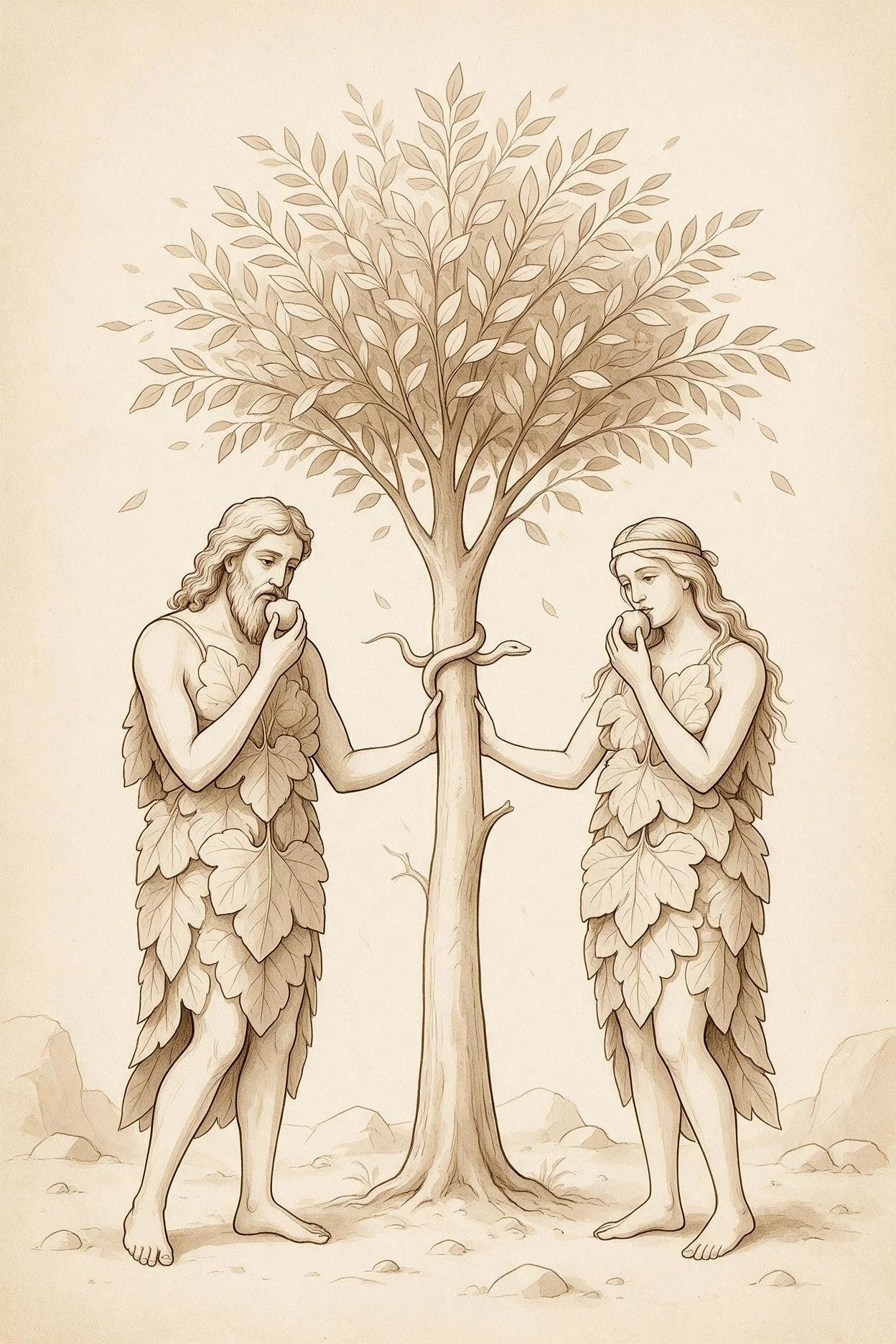
Human disobedience in Eden
Adam and Eve were created good, free, and called to grow in communion with God.
The Fall begins with temptation to distrust God’s goodness and to seek life, wisdom, or fulfillment independently from Him.
The original sin is not simply the eating of forbidden food as an isolated act. It is a free act of disobedience, self-assertion, and mistrust.
The temptation suggests that God is withholding something necessary for human happiness; the same lie recurs whenever sin promises life apart from God.
3. The consequences of the Fall
Alienation
Sin produces alienation from God. Human beings hide, fear God, and experience Him as a threat rather than as the loving source of life.
Sin alienates people from themselves. The mind becomes darkened, desires become divided, and the will becomes weakened.
Sin alienates people from one another. Mutual trust gives way to blame, domination, envy, manipulation, violence, and isolation.
Sin affects the relationship between humanity and creation. The world remains good, but it is experienced amid toil, frustration, decay, suffering, and death.
Shame, fear, and blame
After the Fall, Adam and Eve hide, cover themselves, and blame others.
Shame can reveal an awareness that something is wrong, but unhealed shame often drives concealment, self-protection, and refusal of repentance.
Fear becomes central to fallen existence: fear of suffering, rejection, death, loss, and exposure.
Blaming others—God, the devil, circumstances, family, society, or enemies—can become an attempt to avoid personal responsibility.
Corruption and mortality
Human beings become subject to bodily corruption and death.
Mortality is not the goal for which humanity was created, but God also limits the endless perpetuation of sin in a fallen state.
Death becomes the great enemy of humanity, yet it is conquered through Christ’s death and resurrection.
The Christian hope is not escape from bodily existence but the resurrection and transfiguration of the body.
4. Ancestral sin and personal sin
What humanity inherits
Orthodox theology usually uses the expression ancestral sin to describe the inherited consequences of Adam’s fall.
Human beings inherit a fallen condition: mortality, corruption, a world marked by suffering, and an inclination toward sin.
This differs from saying that each infant personally bears Adam’s individual moral guilt.
Nevertheless, every person personally sins and therefore needs forgiveness, healing, and salvation.
Personal responsibility
Each person is responsible for his or her own choices to the degree that those choices are free and deliberate.
God alone sees the full measure of a person’s responsibility: knowledge, intention, coercion, wounds, age, mental condition, opportunity, and repentance.
Orthodox spirituality avoids both extremes:
Excusing all sin as unavoidable because of human weakness.
Treating every temptation, involuntary thought, or weakness as if it carried the same moral weight as deliberate rebellion.
Sin’s social dimension
Sin is personal but never merely private.
Individual sins affect marriages, families, parishes, workplaces, communities, and future generations.
Social structures can embody injustice, greed, violence, exploitation, or contempt for human life; people should resist and repent of participation in such evils.
Yet the reality of social sin must not become an excuse for neglecting one’s own repentance.
5. Temptation, thoughts, and consent
Temptation is not automatically sin
Being tempted does not itself make someone guilty.
Christ was tempted, yet He did not sin.
Unwanted intrusive thoughts, images, impulses, or emotional reactions require discernment, but they are not automatically voluntary sins.
A person’s responsibility grows when he or she entertains, welcomes, cultivates, consents to, and acts upon temptation.
Watchfulness over thoughts
Orthodox ascetic teaching emphasizes nepsis, spiritual watchfulness or sobriety.
The believer learns to notice thoughts early, before they become fantasies, choices, habits, and outward actions.
The usual movement can be described as:
A tempting suggestion or thought appears.
The person begins to engage it, discuss with it, or imagine it.
The heart gives consent.
Repeated consent develops into habit or passion.
Habit can deepen into slavery.
Prayer, Scripture, confession, fasting, accountability, and prompt rejection of sinful thoughts help interrupt this cycle.
The importance of honesty
Sin grows in secrecy, rationalization, and self-deception.
A person begins healing by naming sin truthfully before God rather than defending it, minimizing it, or comparing oneself favorably with others.
Confession is not humiliation for its own sake; it is an act of bringing hidden sickness into Christ’s healing light.
6. The passions
What the passions are
The passions are habitual distortions of natural human powers and desires.
The goal is not to destroy human desire, emotion, or the body. The goal is their healing and right ordering.
For example:
Hunger can become gluttony.
Sexual desire can become lust.
Concern for material provision can become greed.
Anger at injustice can become wrath, hatred, or revenge.
The desire for rest can become sloth or despondency.
Desire for esteem can become vanity and pride.
Common spiritual illnesses
The Church is a spiritual hospital treating six common spiritual illnesses: self-love, anger, gluttony, despondency, avarice, and pride.
Self-love: making personal comfort, preference, image, and self-protection the center of life rather than God and neighbor.
Anger: a good capacity for resistance to evil becomes destructive wrath, resentment, contempt, or retaliation.
Gluttony: food, drink, consumption, or comfort becomes a controlling source of consolation.
Despondency: spiritual heaviness, discouragement, boredom, restlessness, or refusal to persevere in prayer and responsibility.
Avarice: an excessive grasping for money, possessions, security, or control.
Pride: self-exaltation, self-sufficiency, refusal of correction, and reliance on oneself rather than God.
Healing the passions
Healing requires grace and human cooperation.
The ordinary remedies are humility, prayer, fasting, almsgiving, sacramental confession, Eucharistic life, Scripture, service, forgiveness, and obedience to wise spiritual guidance.
Virtues replace passions rather than leaving a vacuum: generosity counters greed, chastity purifies desire, meekness heals anger, gratitude confronts envy, humility heals pride, and hope strengthens the soul against despondency.
Growth normally takes time. Repeated falls should lead to renewed repentance, not despair or surrender.
7. Seriousness, degrees, and mercy
Not all sins are equal in effect
Every sin separates a person from God and calls for repentance.
Yet sins differ in gravity, intention, harm, deliberateness, and effect upon the soul and others.
Orthodox pastoral practice takes account of circumstance and seeks spiritual healing rather than simple legal classification.
Deliberate, repeated, scandalous, abusive, or life-destroying sin requires serious repentance and may require a fuller pastoral remedy.
Avoiding two errors
Presumption: assuming that sin does not matter because God is merciful.
Despair: assuming that one’s sin is too great for God’s mercy.
The Gospel rejects both. God’s holiness tells the truth about sin; God’s mercy opens a real way of forgiveness and transformation.
No one should use God’s mercy as permission to continue in sin, and no repentant person should conclude that forgiveness is impossible.
8. Christ’s victory over sin
Christ as the new Adam
Jesus Christ enters the fallen human condition without sin.
Where Adam disobeys, Christ obeys the Father.
Where humanity yields to temptation, Christ defeats temptation.
Where death reigns through sin, Christ voluntarily enters death and destroys its dominion through His resurrection.
Salvation is healing and union
Christ forgives sins, but salvation is more than a legal declaration.
He heals the mind, restores the heart, frees the will, sanctifies the body, reconciles people to God and each other, and leads believers toward theosis.
The Cross reveals both the horror of sin and the depth of divine love.
The Resurrection establishes the ultimate confidence of Christian repentance: sin and death do not have the final word.
The Church’s medicine
Baptism joins the believer to Christ’s death and resurrection and begins new life.
Chrismation seals the believer with the gift of the Holy Spirit.
The Eucharist nourishes communion with Christ and the Church.
Confession provides forgiveness, truthfulness, reconciliation, and practical spiritual direction.
Prayer, fasting, almsgiving, Scripture, and works of mercy train the whole person in repentance and love.
The Church is not a community of people who deny their sins; it is a community learning to confess sin and receive Christ’s healing.
9. A practical path of repentance
Recognize and confess
Ask God for light to see sin without excuses or self-hatred.
Name the concrete thought, word, action, habit, or omission honestly.
Take responsibility without blaming other people, circumstances, or temptation.
Bring serious or repeated sin to sacramental confession and receive pastoral counsel.
Turn and repair
5. Stop or interrupt the sinful action where possible.
6. Ask forgiveness from God and, when appropriate and safe, from those harmed.
7. Make restitution where it is genuinely possible: return what was taken, correct falsehood, repair damage, or change the conditions that make repeated sin likely.
8. Replace the sinful habit with a specific practice of virtue, prayer, accountability, generosity, or service.
Persevere in hope
9. Do not measure repentance solely by emotion. Tears may be a gift, but steady obedience is also repentance.
10. If a person falls again, return quickly to God rather than postponing prayer because of shame.
11. Receive God’s mercy with gratitude and avoid judging others as though their sins are worse than one’s own.
10. Scripture for study
Genesis 3:1–24 — The Fall, concealment, blame, exile, and death
Psalm 32; Psalm 51 — Confession, contrition, forgiveness, and restoration
Isaiah 1:16–20; Isaiah 55:6–9 — Cleansing, turning to God, and divine mercy
Ezekiel 18:21–32 — God’s desire that the sinner turn and live
Matthew 4:1–11 — Christ’s temptation and victory
Matthew 6:9–15 — Forgiveness and the Lord’s Prayer
Luke 15:11–32 — The prodigal son and return to the Father
Luke 18:9–14 — The Pharisee and the tax collector
John 8:1–11 — Mercy joined to the command to leave sin
Romans 5:12–21 — Adam, death, and Christ’s grace
Romans 6:1–14 — Baptismal union with Christ and freedom from sin
Romans 7:14–25; 8:1–17 — Human struggle and life in the Spirit
1 Corinthians 10:12–13 — Temptation and God’s provision of escape
Galatians 5:16–26 — Works of the flesh and fruit of the Spirit
James 1:12–15 — The development of temptation into sin
1 John 1:5–2:2 — Confession, forgiveness, and Christ our advocate
Questions for reflection
How is sin a distortion of a good created desire rather than an independent “thing” made by God?
What distinguishes temptation, unwanted thoughts, entertained thoughts, consent, habitual sin, and outward action?
Why is the Church’s description of sin as illness compatible with personal responsibility?
What forms of fear, shame, blame, or self-justification keep a person from honest repentance?
Which passions most often seek control in daily life: anger, comfort-seeking, despair, greed, vanity, pride, or another habitual pattern?
What specific practice could replace a recurring sinful pattern with a corresponding virtue?
How does belief in Christ’s resurrection protect a person from despair after grave or repeated sin?
Is there a relationship, habit, or injury that requires concrete repair as part of repentance?