Course Content
IN THIS LESSON
1. The Central Question
Why begin with God?
Catechesis begins with God because every Christian teaching about creation, humanity, salvation, morality, worship, and eternal life depends on who God is.
The first and most basic religious question is not merely whether people are “spiritual,” but whether they know and worship the true God.
Orthodox Christianity does not present God as an abstract idea, impersonal force, moral principle, or projection of human needs. God is living, personal, transcendent, and self-revealing.
The Christian life is therefore not fundamentally self-improvement or religious information; it is communion with the God who made humanity for Himself.
The basic Christian confession
There is only one God.
This God is not one being among many beings; He is the uncreated Creator and source of all that exists.
The one God is eternally Father, Son, and Holy Spirit.
The knowledge of God calls for worship, repentance, obedience, thanksgiving, and love—not detached speculation alone.
A concise formula is: one God, three divine Persons, one divine essence or nature.
2. Knowing the true God
God takes the initiative
Human beings can recognize signs of God in creation, conscience, beauty, order, life, and their hunger for meaning.
Yet fallen human reason does not reach a full, saving knowledge of God by its own powers. Human beings readily distort divine truth, make idols, and reshape religion around their own desires.
God therefore reveals Himself. He makes Himself known through His acts in history, through the prophets, through the Scriptures, through the worshiping life of Israel and the Church, and decisively through His Son.
Creation and natural knowledge
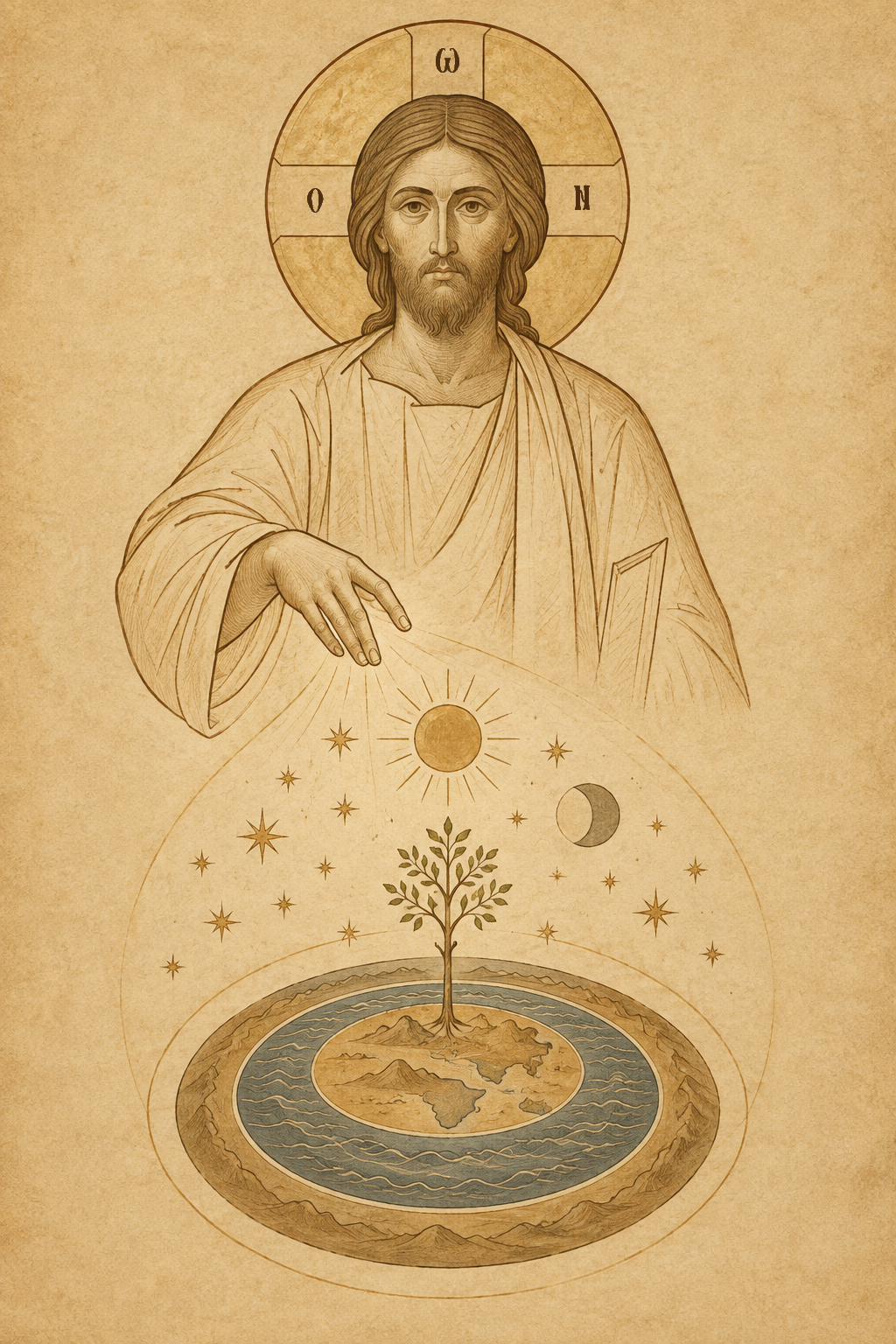
The existence and order of creation direct the mind beyond the created world to its Creator.
The world is contingent: it does not explain itself, did not create itself, and depends at every moment upon God’s sustaining will.
Creation reveals God’s power, wisdom, generosity, and providence, but it is not itself God.
Orthodox Christianity rejects both materialism, which treats matter as all that exists, and pantheism, which identifies God with the universe.
Full revelation in Christ
Jesus Christ is not merely a teacher who tells humanity about God; He is the eternal Son and Word of God made man.
To know Christ is to be brought into the knowledge of the Father, through the illuminating and sanctifying work of the Holy Spirit.
Christian knowledge of God is thus Trinitarian from the beginning: believers approach the Father through the Son in the Holy Spirit.
The Church’s worship, especially its baptismal confession and liturgical prayers, preserves and transmits this revealed knowledge.
3. God as Creator and Lord
God is uncreated
God has no beginning, no cause, and no origin outside Himself.
Everything other than God is created: angels, visible creation, human beings, time, matter, and the whole cosmos.
God does not merely arrange pre-existing material. He freely brings creation into being and sustains it.
Because God is uncreated while creation is created, the distinction between Creator and creature must always be preserved.
God is free and good
God created the world freely, not because He lacked anything or needed creation to complete Himself.
Creation is an expression of divine goodness and generosity.
The world is fundamentally good because its Creator is good, even though it is now marked by corruption, death, and sin.
God’s lordship does not make human beings insignificant. Instead, the Creator gives people dignity, freedom, responsibility, and a vocation to grow in communion with Him.
Providence
God continually sustains and governs creation.
Divine providence means that history is neither meaningless nor controlled by blind fate.
Providence should not be confused with fatalism. God’s care does not eliminate human freedom, moral responsibility, suffering, or the real consequences of sin.
Trust in providence forms a Christian response to fear, anxiety, suffering, and uncertainty.
4. The divine attributes
The Church uses human words to speak truthfully about God, while recognizing that God infinitely exceeds every created concept. Orthodox teaching therefore combines confident confession with humility and reverence.
God is eternal
God is not bound by time as creatures are.
He does not grow old, change through decay, or move from ignorance to knowledge.
God sees and upholds all times; He is present to the entire history of creation without being limited by it.
God is unchanging
God is stable, faithful, and not subject to moral fluctuation, passion, or deterioration.
Divine immutability does not mean God is cold or inactive. It means His love, goodness, and faithfulness are perfect rather than unstable.
When Scripture speaks in human terms of God “repenting,” becoming angry, or changing His mind, Orthodox interpretation does not treat God as emotionally volatile. Such language communicates God’s real relation to human actions in ways human beings can understand.
God is all-powerful
God possesses power without limitation or dependence.
His power is not arbitrary force. It is the power of perfect goodness, wisdom, and love.
God cannot act contrary to His own holy nature; divine omnipotence does not mean irrationality, falsehood, or evil become possible for God.
God is all-knowing
God knows all things: what has been, what is, and what will be.
His knowledge is not acquired through observation or learning.
God’s foreknowledge does not turn human beings into machines. Orthodox theology holds together God’s knowledge, divine providence, and authentic human freedom.
God is everywhere present
No place confines God, and no creature lies outside His sustaining presence.
God is not spread out in pieces across the universe. He is wholly present everywhere while remaining beyond all created space.
This divine presence makes prayer possible everywhere and calls Christians to live with reverence.
God is holy, righteous, and good
Holiness means God is utterly pure, unique, and beyond every created limitation.
Divine righteousness is not mere legal severity; it is God’s perfect truth, goodness, faithfulness, and judgment against evil.
God’s goodness is not sentimental permissiveness. He loves humanity enough to call people out of sin and toward holiness.
God is love
The Christian claim that “God is love” has a Trinitarian depth: love is not something God began doing when He created the world.
The Father eternally loves the Son, and the Holy Spirit is fully divine and inseparable from the life of the Father and the Son.
Divine love is self-giving, life-giving, holy, and transformative—not a license for sin or mere approval of whatever people choose.
5. The Holy Trinity
One God, not three gods
Orthodox Christians confess one God, not a committee of three gods.
The Father, Son, and Holy Spirit share the one undivided divine essence.
Each Person is fully and truly God: not one-third of God, not a temporary role, and not a lesser divine being.
The Persons are distinct, but never divided; they act inseparably in the divine work of creation, salvation, sanctification, and judgment.
The Father
The Father is the unoriginate source within the Holy Trinity.
He eternally begets the Son and eternally brings forth the Holy Spirit.
Calling God “Father” is not a metaphor imposed upon God by human family life; rather, human fatherhood is an imperfect created reflection of the divine reality.
The Father is not “more God” than the Son or Spirit, and He does not become Father at creation or at the incarnation.
The Son
The Son, also called the Word or Logos, is eternally begotten of the Father.
He is not created and did not come into existence at a point in time.
The Son is fully God, of the same divine essence as the Father.
The eternal Son becomes incarnate for human salvation without ceasing to be God;
The Holy Spirit
The Holy Spirit is fully God, eternal, uncreated, and worthy of the same worship and glorification as the Father and the Son.
The Spirit proceeds from the Father, as confessed in the Nicene-Constantinopolitan Creed.
The Spirit gives life, sanctifies, illumines, unites believers to Christ, and makes the Church the dwelling place of God.
The Holy Spirit is not an impersonal power, influence, or merely symbolic expression of God’s activity; He is a divine Person.
Avoiding common errors
Tritheism: treating Father, Son, and Holy Spirit as three separate gods.
Modalism: treating Father, Son, and Spirit as merely three masks, roles, or appearances used by one solitary divine person.
Subordinationism or Arianism: treating the Son or Spirit as a creature, lesser deity, or being not fully equal with the Father.
Impersonalism: speaking of God as an energy or force rather than a communion of divine Persons.
6. God’s essence and energies
A distinctly Orthodox emphasis is that God is both truly unknowable in His essence and truly communicable in His grace and activity.
God is beyond comprehension
No creature can comprehend or contain God’s inner essence.
Human language, images, concepts, and theological statements do not exhaust God.
This protects Christians from imagining that they possess God intellectually or have reduced Him to a manageable object of study.
The proper response to divine mystery is not agnosticism, but reverence: God is genuinely known, though never fully comprehended.
God is truly knowable
God makes Himself known through His uncreated energies: His grace, glory, light, power, wisdom, love, and saving action.
This does not mean that people receive a created substitute for God. Rather, through grace they truly participate in God’s life while remaining creatures.
The goal of salvation is not merely external forgiveness or moral improvement, but theosis—participation in the divine life by grace.
This participation never erases the distinction between Creator and creature. Human beings do not become God by nature.
Practical implication
Prayer, sacraments, Scripture, fasting, almsgiving, repentance, and life in the Church are not simply religious duties. They are means by which believers are purified, illumined, and united to God by grace.
Theology should lead toward worship and transformation, not pride or argument for its own sake.
7. True worship and false worship
Worship belongs to God alone
The proper human response to the true God is adoration, thanksgiving, obedience, repentance, and love.
Worship is not entertainment, self-expression, or a consumer preference. It is humanity’s proper participation in the life for which it was created.
Orthodox worship is shaped by the Church’s received faith, Scripture, sacramental life, and communion with the saints.
Idolatry
An idol is anything treated as ultimate in the place of God.
Idolatry can take visibly religious forms—false gods, occult practices, superstition, or invented spirituality—but it can also take secular forms.
Wealth, power, nationalism, pleasure, success, ideology, reputation, family, career, or even one’s own religious opinions can become idols when they displace God.
The issue is not simply possessing good things; it is whether a good created thing is made into an ultimate thing.
Saints, icons, and Christian devotion
Orthodox Christians worship God alone: Father, Son, and Holy Spirit.
Honor shown to saints or icons is not the worship owed to God. It is reverence directed toward those who manifest God’s grace, and honor given to an icon passes to the person represented.
Icons confess that the invisible God truly became visible in the incarnation of the Son. They point beyond themselves to Christ and His saving work.
8. Catechetical application
A person’s view of God shapes everything else
If God is thought to be distant, people may reduce faith to moralism or private spirituality.
If God is treated as impersonal, prayer and communion become unintelligible.
If God is imagined as indulgent but not holy, repentance loses its urgency.
If God is portrayed only as a judge without love, people may fall into fear, despair, or servile religion.
Orthodox faith holds divine holiness, justice, mercy, power, and love together in the one living God.
Questions for reflection
When I use the word “God,” do I mean the God revealed as Father, Son, and Holy Spirit—or a vague spiritual idea?
What created things most tempt me to seek ultimate security, identity, or happiness apart from God?
Do I treat theology as information, or as an invitation to worship, repentance, and transformation?
How does belief in God as Creator change my view of my body, other people, the created world, and my responsibilities?
What does it mean to say that God is beyond comprehension yet genuinely knowable?
How can I grow in a life that is consciously lived “in the presence of God”?
In what practical ways should the confession “God is love” change my prayer, family life, use of time, and treatment of others?
Suggested Scripture anchors
These passages fit naturally with the lecture’s subject and can be read alongside the study outline:
Deuteronomy 6:4 — The foundational confession of the one God.
Psalm 18:1–3; Psalm 103; Psalm 139 — God’s strength, mercy, knowledge, and presence.
Isaiah 40:12–31; Isaiah 43:10–13; Isaiah 45:5–7 — God’s uniqueness, creative power, and sovereignty.
John 1:1–18 — The eternal Word and the revelation of God in Christ.
John 14:6–11; John 17:1–5 — The Son’s revelation of the Father.
Matthew 28:18–20 — Baptism into the Name of Father, Son, and Holy Spirit.
2 Corinthians 13:14 — A classic Trinitarian blessing.
Romans 1:18–25 — Creation, knowledge of God, and the distortion of worship into idolatry.
Acts 17:22–31 — The Creator is near, yet not reducible to human images or shrines.
1 John 4:7–16 — God’s love revealed in the sending of the Son.