
Course Content
IN THIS LESSON
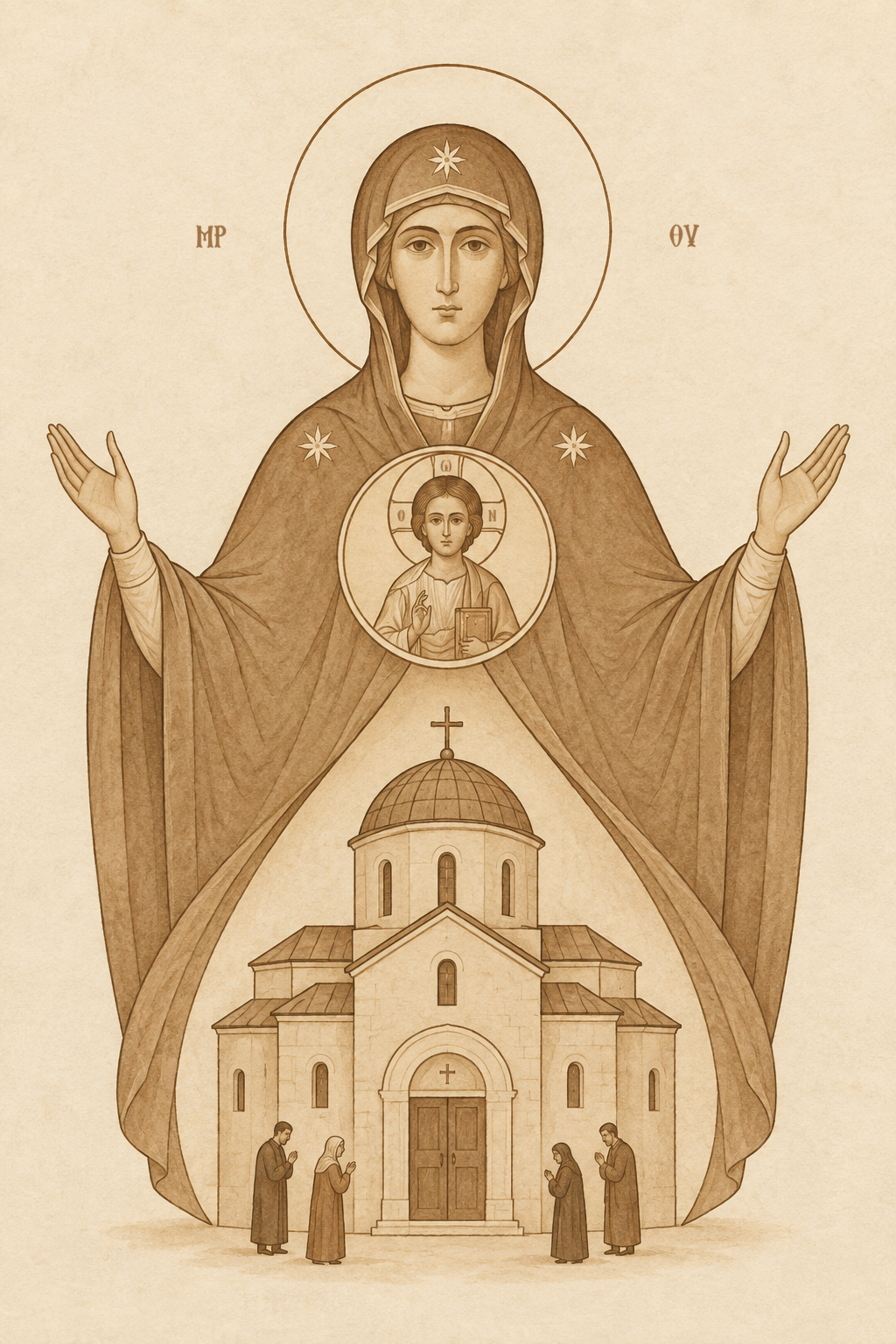
1. The Church: Christ’s continuing presence
Why the Church matters
Jesus Christ does not save people merely as isolated individuals. He gathers them into a visible, worshiping, sacramental communion: the Church.
The Church is not simply a human religious organization, voluntary association, building, denomination, or collection of people with similar opinions.
It is the Body of Christ, the dwelling place and temple of the Holy Spirit, and the family of God.
Christ is the head of the Church; the Church belongs to Him and receives her life, teaching, worship, unity, holiness, and mission from Him.
To say “I want Christ but not the Church” misunderstands the New Testament image: Christ and His Body are not separable.
The Church is both divine and human
The Church is divine in origin and life because she is founded by Christ, animated by the Holy Spirit, and called to lead people into communion with the Holy Trinity.
The Church is human in her members. Clergy and laity can sin, fail, disappoint, and require repentance.
Human failure does not mean Christ has abandoned His Church or that the Church’s sacramental life has become merely human.
The Church is a spiritual hospital, not a museum for morally perfect people. Her purpose is healing, restoration, sanctification, and salvation.
The Church as the New Covenant people
God’s saving work unfolds through a people: Israel in the Old Covenant and the Church in the New Covenant.
The Church is not a replacement built on contempt for Israel; it is the fulfillment of God’s promises in Christ and the gathering of Jews and Gentiles into one people.
The Church’s mission is universal: to proclaim Christ to every nation, baptize, teach, serve, and call the world to repentance and faith.
The Church remains apostolic because it continues in the faith, worship, sacramental ministry, and mission received from the apostles.
2. The marks of the Church
The Nicene Creed identifies the Church as one, holy, catholic, and apostolic. These are not merely ideals. They identify the Church’s God-given nature and calling.
One
The Church is one because God is one, Christ has one Body, and the Holy Spirit gathers believers into one communion.
Unity is expressed in a common apostolic faith, sacramental communion, shared worship, episcopal oversight, and mutual love.
Orthodox unity is not simply organizational efficiency or agreement to disagree about doctrine. It is unity in the truth received from Christ.
Schism is a grave wound because it divides what God has called to be one; Christians should seek unity through truth, repentance, and charity rather than rivalry.
Holy
The Church is holy because Christ is holy, the Spirit is holy, the sacraments communicate holiness, and the saints reveal the fruit of grace.
Holiness does not mean every Church member is already holy.
The Church calls sinners to repentance and provides the means of healing; scandals and sins within the Church contradict, but do not overturn, her holy vocation.
The saints are living evidence that genuine transformation and communion with God are possible.
Catholic
“Catholic” means universal, whole, and according to the fullness.
The Church is catholic because she confesses the whole apostolic faith, offers the fullness of sacramental life, and is sent to all peoples.
Catholicity is not defined simply by size, political power, geographic reach, or a particular modern institutional identity.
A local Orthodox parish is not a partial church when it lives in communion with its bishop and the universal Orthodox faith; the full Church is present in the Eucharistic assembly when in communion with a canonical bishop.
Apostolic
The Church is apostolic because she was founded on the apostles and continues their faith, teaching, worship, ministry, and mission.
Apostolic succession means more than a historical chain of ordinations. It includes continuity in the apostolic confession of faith and sacramental communion.
Bishops serve as successors to the apostles in guarding the faith, presiding in unity, ordaining clergy, and overseeing the Church’s worship and pastoral care.
The apostolic character protects the Church from treating the faith as something each generation may reinvent.
3. The Church’s life and ministry
Scripture and Holy Tradition
The Church receives the Holy Scriptures as inspired testimony to God’s revelation and as the authoritative written heart of Holy Tradition.
Holy Tradition is not an addition to Scripture or an accumulation of optional customs. It is the living transmission of apostolic faith in worship, doctrine, Scripture, councils, creeds, canons, iconography, preaching, and the lives of the saints.
The Church reads Scripture liturgically and christologically: the Old Testament is fulfilled in Christ, and the New Testament is heard within the worshiping community.
Personal Bible reading is essential, but private interpretation detached from the Church’s historic faith can lead to confusion and contradictory teachings.
Liturgy and sacraments
The Church’s primary work is worship: offering thanksgiving to God and entering Christ’s saving life.
In the Divine Liturgy, heaven and earth are united as the Church offers praise to the Holy Trinity and receives Christ in the Eucharist.
Baptism, chrismation, Eucharist, confession, marriage, ordination, and unction communicate and strengthen the life of grace.
Sacramental life is not magic or religious performance. It calls for faith, repentance, preparation, and an increasingly obedient life.
Clergy and laity
Every baptized Orthodox Christian belongs to the royal priesthood and is called to worship, witness, serve, pray, give, and pursue holiness.
Bishops, priests, and deacons have distinct ordained ministries for the Church’s order, worship, teaching, and pastoral care.
Clergy are not spiritual celebrities or owners of the Church. They are servants and stewards accountable to Christ.
Laypeople are not passive consumers. Their “Amen,” prayer, participation, home life, charitable service, witness, and faithfulness are essential to the Church’s life.
The communion of saints
The Church includes the faithful on earth and those who have died in Christ.
Death does not sever the members of Christ’s Body from Him or from one another.
The saints are not independent mediators who replace Christ; they are living members of Christ who pray and intercede within His one saving mediation.
Asking saints to pray is analogous to asking another Christian to pray, though in the case of saints it recognizes their life in Christ and nearness to Him.
4. The Mother of God
Who is the Theotokos?
The Orthodox Church calls the Virgin Mary Theotokos, meaning “God-bearer” or “Mother of God.”
This title is first and foremost a confession about Jesus Christ: the One conceived in her womb and born from her is the eternal Son of God who has truly become man.
It does not mean Mary created the divine nature, existed before God, or is a fourth person of the Trinity.
The title was defended at the Council of Ephesus in 431 against attempts to divide Christ into two subjects—one divine and one human.
To refuse the title “Mother of God” risks separating the human Jesus from the eternal Son who personally assumed human nature.
Mary’s place in salvation history
Mary’s “yes” to God at the Annunciation is a real, free response to grace.
The Holy Spirit overshadows her, and the Son becomes incarnate from her without ceasing to be God.
Mary does not save humanity independently; Christ alone is Savior. Yet she freely cooperates with God’s saving plan by giving Him human flesh.
Orthodox tradition often calls her the New Eve: where Eve’s disobedience participates in the Fall, Mary’s faithful obedience opens the way for the incarnation of the New Adam, Christ.
She is blessed among women because of her unique relationship to Christ and because she hears God’s word and keeps it.
Ever-Virgin
Orthodox Christianity confesses Mary as Virgin before, during, and after Christ’s birth.
Her perpetual virginity expresses the singularity and holiness of the incarnation and her complete dedication to God.
The New Testament references to Christ’s “brothers” and “sisters” are interpreted in Orthodox tradition as relatives or members of a wider household, not necessarily children later born to Mary.
This teaching should not imply that ordinary Christian marriage is impure; marriage is blessed and sacramental. Mary’s virginity has a distinctive place in the mystery of Christ’s coming.
The holiness of Mary
Mary is uniquely called All-Holy because she receives and obeys God’s grace with profound faithfulness.
Orthodox Christianity emphasizes her personal purity, without framing her holiness through the later Latin definition of the Immaculate Conception.
Her holiness remains a gift of God’s grace, received freely and faithfully; it is not self-generated divinity.
She is honored above the angels because she bears in her womb the Creator of all.
5. Veneration, intercession, and worship
Worship belongs to God alone
Orthodox Christians worship the Holy Trinity alone: Father, Son, and Holy Spirit.
Mary is not worshiped as a goddess, redeemer, or independent source of grace.
The honor offered to Mary is called veneration, not adoration.
The distinction is crucial:
Worship/adoration belongs to God alone.
Veneration honors those in whom God’s grace is manifest.
Special veneration is offered to the Theotokos because of her singular relationship to the incarnate Son.
Intercession of the Theotokos
Orthodox Christians ask Mary to pray for them as they ask living Christians to pray.
Her intercession does not bypass Jesus or compete with Him.
The Church’s hymns frequently ask for her prayers because she is the Mother of the Lord and a faithful member of His Body.
Intercession expresses the communion of saints: believers in Christ remain united across death.
Icons of Christ and His Mother
The incarnation makes icons possible because the Word truly became visible in human flesh.
An icon of Christ depicts the incarnate Son, not the invisible divine essence.
Icons of the Theotokos honor her as the one who bears Christ and direct the faithful toward Him.
Orthodox iconography is theological: titles, gestures, colors, and composition communicate truths about Christ, the Church, and salvation history.
Veneration passes to the person depicted; wood and paint are not worshiped.
6. The Church and the Theotokos together
Mary as an icon of the Church
Mary’s faithful “yes” to God models the Church’s vocation: to hear God’s Word, receive Christ, bear Him to the world, and remain faithful at the Cross.
Just as Mary receives the Word bodily, the Church receives Christ sacramentally and proclaims Him through worship and mission.
Mary’s virginity and motherhood are often understood as an image of the Church, which preserves fidelity to Christ and brings forth new children through baptism.
Her humility, obedience, prayer, courage, and steadfastness form a pattern for every disciple.
The Church as mother
The Church is called mother because she gives birth to new Christians through baptism, nourishes them in the Eucharist, teaches them the faith, corrects them, and restores them through repentance.
A person cannot claim to receive spiritual life while rejecting the community and sacramental means through which Christ gives it.
The Church’s maternal care is not sentimental. Like a good mother, she teaches truth, calls children away from danger, disciplines for healing, and offers mercy to the repentant.
Christ at the center
Proper honor of Mary always magnifies Christ.
Her most enduring biblical instruction is: “Do whatever He tells you.”
Marian devotion becomes distorted if it treats Mary as detached from Christ, ignores her humble obedience, or becomes more central than worship of the Holy Trinity.
Authentic Orthodox devotion to the Theotokos deepens faith in the incarnation, gratitude for salvation, love for the Church, and obedience to Christ.
7. Common misunderstandings
“The Church is only invisible”
The Church has a mystical, heavenly dimension, but she is also visibly present in history through apostles, bishops, local communities, worship, sacraments, teaching, and service.
A purely invisible Church cannot fully account for Christ’s founding actions, apostolic authority, baptism, Eucharistic communion, discipline, and the councils of the early Church.
Visibility without spiritual life is inadequate, but spirituality without the Church’s concrete communion is also incomplete.
“The Church’s sinners prove it is false”
Sin among Christians is a grave contradiction of the Gospel and may cause real harm.
Yet Christ foretells mixture, struggle, betrayal, and the need for judgment among His followers.
The truth of the Church rests on Christ’s faithfulness, not on the moral perfection of every member or leader.
Scandal should lead to truth, accountability, protection of the vulnerable, repentance, and reform—not denial or excuses.
“Honoring Mary replaces Christ”
Theotokos is a Christological title: it safeguards that Jesus is truly God incarnate.
Mary is honored because of Christ; apart from Him, her role has no independent Christian meaning.
Orthodox worship remains strictly Trinitarian and Christ-centered.
“Asking saints for prayer is necromancy”
Necromancy seeks secret knowledge or power from the dead apart from God and is rejected by Christianity.
Asking saints to pray is an expression of communion in Christ, who is God of the living, not the dead.
The practice depends on the Resurrection and on the conviction that those who die in Christ remain alive in Him.
8. Practical catechetical application
Entering the Church’s life
Attend the Divine Liturgy faithfully and learn the basic prayers, hymns, gestures, and rhythm of the liturgical year.
Read the Creed carefully and learn what “one, holy, catholic, and apostolic Church” means in practical terms.
Build a relationship with the parish priest and participate in parish life rather than treating church attendance as anonymous consumption.
Read Scripture in company with the Church’s worship and teaching.
Prepare for baptism, chrismation, confession, and Communion seriously, according to pastoral guidance.
Serve others through hospitality, generosity, intercession, care for the sick, and practical support for parish and community needs.
Learn a simple prayer to the Theotokos, such as asking her intercessions after praying directly to Christ.
Learning from Mary
Practice her response at the Annunciation: receive God’s will with humility, trust, and readiness to obey.
Keep Christ at the center: Mary directs attention toward her Son.
Cultivate quiet faithfulness in ordinary responsibilities rather than seeking recognition.
Stand near those who suffer, as Mary stands at the Cross, with prayerful presence and steadfast love.
Let devotion produce greater obedience to Christ, not merely emotional attachment or religious aesthetic.
9. Scripture for study
Genesis 3:15 — The promise concerning the woman and the defeat of the serpent
Isaiah 7:14; 9:6–7 — The virgin’s child and the divine Messiah
Matthew 16:13–19; 18:15–20; 28:18–20 — Christ’s Church, discipline, and mission
Luke 1:26–56; 2:1–52; 11:27–28 — Annunciation, Nativity, Mary’s faith, and hearing God’s word
John 2:1–11; 19:25–27 — Cana and Mary at the Cross
Acts 1:12–14; 2:42–47 — Mary with the apostolic Church and the Church’s early life
Romans 12:3–21 — One body with many members and the life of love
1 Corinthians 10:16–17; 12:12–27 — Eucharistic communion and Christ’s Body
Ephesians 1:22–23; 2:19–22; 4:1–16; 5:22–33 — Church as Body, household, temple, and bride
1 Timothy 3:14–15 — The Church as the pillar and ground of the truth
Hebrews 12:1–2, 22–24 — The heavenly assembly and cloud of witnesses
Revelation 5:8; 7:9–17; 12:1–17; 21:1–4 — Heavenly worship, saints’ prayers, the woman, and the new creation
Questions for reflection
Why is the Church more than a voluntary association or a building?
How can the Church be holy while many of her members, including clergy, are sinners?
What does each Nicene mark—one, holy, catholic, apostolic—require of an Orthodox Christian in daily parish life?
Why is Theotokos primarily a statement about Jesus Christ?
How does Mary’s response to the angel model Christian faith and repentance?
What is the difference between worship offered to God and veneration offered to Mary and the saints?
Why does the incarnation provide the theological foundation for icons?
How does asking the saints to pray differ from seeking hidden knowledge or power from the dead?
What habits would help turn church attendance into active participation in the Church’s sacramental and communal life?
How can devotion to the Mother of God make a person more—not less—Christ-centered?