Course Content
IN THIS LESSON
1. The fundamental question
What is a human being?
The Christian answer begins with God the Creator. Human beings are not accidents of matter, self-created individuals, or merely highly developed animals.
A human person is a created being, made by God, possessing both a material body and an immaterial soul.
Human dignity rests neither on intelligence, productivity, physical independence, health, age, social status, nor usefulness. It rests on being created in God’s image and called to communion with Him.
To understand humanity rightly, Christians must consider:
Humanity’s creation and original vocation
The image and likeness of God
Body and soul as one human unity
Freedom and moral responsibility
The Fall, sin, death, and disordered desire
Redemption in Christ and the hope of resurrection
The human purpose
The human being exists to know, love, worship, and glorify God.
Human fulfillment is not autonomous self-definition, but becoming what God created the person to be.
Orthodox theology describes the ultimate human vocation as theosis: participation in God’s life by grace, without confusion between Creator and creature.
Worship is central to this vocation. Worship is the human calling toward union with God and identifies it as essential to what it means to be fully human.
2. Created by God
Humanity is created, not self-originating
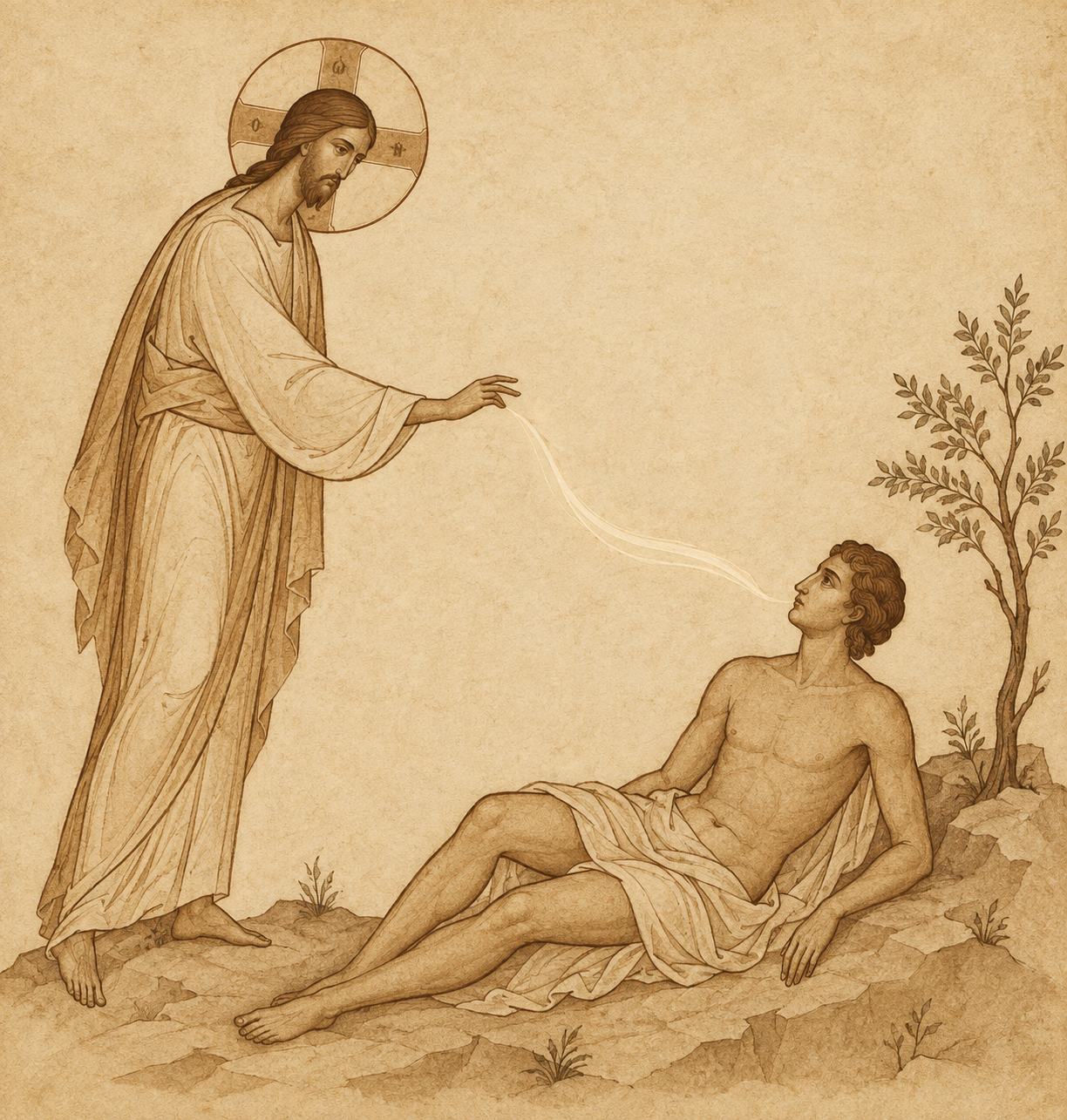
God freely creates human beings, giving them existence, identity, bodily life, reason, freedom, and a purpose.
Human life is therefore a gift, not private property over which a person has unlimited authority.
Since God is the Creator, He alone fully knows what human beings are and what enables them to flourish.
Createdness should produce humility, gratitude, care for one’s body and soul, reverence for others, and responsibility toward the world.
Male and female
Scripture presents humanity as created male and female.
Man and woman share the same human nature, equal dignity, and the divine image.
Sexual difference is not a defect or an embarrassment; it belongs to the goodness of the created order.
Marriage unites man and woman in a one-flesh communion oriented toward mutual sanctification, faithfulness, family life, and the reception of children as gifts.
The Church’s moral vision treats the body and sexuality seriously precisely because they are meaningful, personal, and created by God.
Stewardship of creation
Human beings are given a distinctive role within creation: to cultivate, guard, and offer the created world back to God in thanksgiving.
This authority is stewardship, not exploitation. Dominion is modeled after God’s care, not domination for selfish gain.
The human person stands at the meeting point of visible and invisible creation: bodily like the material world, yet spiritually capable of knowing and worshiping God.
In liturgical worship, human beings bring created gifts—bread, wine, water, oil, incense, language, song, time, and bodily action—into thanksgiving before God.
3. Image and likeness of God
The image
The book of Genesis teaches that human beings are made in God’s image.
The image marks the unique dignity and calling of every human person.
Orthodox writers often relate the image to capacities such as reason, freedom, personal communion, creativity, moral awareness, and the ability to know and love God.
The image must not be reduced to one isolated faculty. A person imitates God as a whole personal being, body and soul together, called into loving communion.
The divine image remains in every person, even when sin damages human life. For this reason, every person must be treated with reverence.
The likeness
The likeness refers especially to the intended growth of the person toward God: holiness, virtue, love, and union with Him.
The image is given; the likeness involves a dynamic vocation and cooperation with divine grace.
Humanity was created with the capacity and calling to grow continually in likeness to God.
The Christian life is therefore a path of restoration and maturation: the person is purified from sin, healed of passions, illuminated by grace, and conformed to Christ.
Christ, the perfect image
Jesus Christ is the eternal Son of God and the perfect revelation of the Father.
In becoming man, Christ reveals not only who God is, but what authentic humanity is meant to be.
Sinful humanity distorts the image; Christ restores and perfects human nature.
To become truly human is to be united to Christ, to be formed in His humility, holiness, self-giving love, obedience, and victory over death.
4. Body, soul, and personhood
One human being, not two separate beings
Orthodox Christianity rejects the notion that the “real person” is a soul temporarily trapped in a body.
A human being is a unity of body and soul. The body is not an accident, disposable shell, or inherently evil element.
The soul is not material, and it gives life to the body; the body makes visible the life and actions of the person.
Death is unnatural because it tears apart what God created as a unity: body and soul. The resurrection of the body is therefore essential to Christian hope.
The goodness of the body
God creates the body good.
The incarnation confirms bodily dignity: the Son of God truly takes human flesh, lives a bodily human life, suffers, dies, rises bodily, and ascends bodily.
The Church’s sacramental life honors the body through baptismal water, chrism, bread and wine, oil, touch, bowing, fasting, feasting, processions, icons, and the veneration of relics.
Bodily discipline in fasting or chastity is not hatred of the body; it is training the body and desires to serve God’s purposes.
The soul and spiritual capacities
The soul gives life to the body and enables intellectual, moral, and spiritual activity.
Human beings can know truth, freely choose, love, repent, pray, and enter communion with God.
The nous, often translated mind or spiritual intellect, is the deepest faculty through which the person can know God and perceive spiritual truth.
Sin darkens and scatters the nous. Prayer, repentance, sacramental life, Scripture, fasting, and works of mercy help restore the person’s inner attention toward God.
Personhood and communion
A person is not merely an individual unit or a bundle of preferences.
True personhood is expressed in love, relationship, responsibility, and self-giving communion.
God is not solitary; He is Father, Son, and Holy Spirit. Human beings imitate this divine life by growing in faithful communion with God and neighbor.
Individualism, isolation, and self-assertion as ultimate values cannot fulfill the human vocation.
5. Freedom and the moral life
Freedom as the ability to love God
Human beings possess real freedom because they are made in God’s image.
Freedom is not simply unrestricted choice or the power to satisfy any desire.
True freedom is the ability to choose the good, reject sin, love God, and become what one was created to be.
Sin promises freedom but enslaves. The passions narrow the will, distort desire, and make a person less capable of loving rightly.
The conscience
Conscience is the inner moral awareness that testifies to good and evil.
Conscience is real but requires formation; it can be neglected, distorted, or wounded by sin and cultural pressure.
The Church forms conscience through the commandments, the Gospel, liturgical worship, the example of the saints, spiritual counsel, repentance, and sacramental confession.
A well-formed conscience does not merely ask, “What do I feel?” or “What is permitted?” It asks, “What is faithful, holy, loving, and pleasing to God?”
Moral responsibility
Human choices matter because human beings act freely and personally.
People are accountable to God for how they use their bodies, time, words, possessions, gifts, relationships, and authority.
Human responsibility should not lead to despair. God judges with perfect knowledge of each person’s circumstances, wounds, intentions, opportunities, and degree of freedom.
Repentance remains possible because God’s mercy is greater than sin and Christ came to heal, forgive, and restore.
6. The Fall and the wounded human condition
Original goodness and original vocation
Humanity was created good and oriented toward God.
The first human beings were called to trust God, obey Him, grow in virtue, and lead creation into thanksgiving.
Their life in Paradise was not static perfection in the final sense; it was the beginning of a vocation to mature in communion with God.
The entrance of sin
Sin begins with distrust of God and the misuse of human freedom.
The Fall is fundamentally a turning away from the Giver toward created goods treated as substitutes for God.
Adam and Eve’s disobedience brings alienation: from God, from one another, from their own hearts, and from the created world.
Sin introduces corruption and death into human experience. Human beings become subject to mortality, fear, blame, shame, disordered desire, and bondage to the passions.
Ancestral sin
Orthodox teaching commonly speaks of ancestral sin: humanity inherits the consequences of Adam’s fall, especially mortality and a world marked by corruption and sin.
Human beings do not inherit Adam’s personal guilt as though each individual committed his particular act.
Because people are born into a fallen condition, each person also personally commits sins and needs healing, forgiveness, and restoration.
Baptism unites believers to Christ’s death and resurrection, frees them from the dominion of death and sin, and begins a lifelong process of renewal.
The passions
In Orthodox language, passions are not merely strong feelings. They are disordered habits or movements of the soul that misdirect natural human powers.
Hunger, desire, anger, longing for recognition, and the wish for security are not evil in themselves. They become destructive when detached from love of God and neighbor.
The Church’s ascetic disciplines aim to heal desire, not suppress humanity.
The goal is not emotional numbness, but freedom from domination by sinful impulses and the growth of holy love.
7. Christ restores humanity
The Incarnation
The Son of God assumes true human nature without ceasing to be fully God.
What Christ assumes, He heals: human body, soul, will, suffering, mortality, and the whole human condition, though without sin.
Christ enters human life from within in order to conquer sin, death, and the devil.
The incarnation shows the immeasurable value of human nature and confirms that salvation is not escape from creation, but its healing and transfiguration.
The Cross and Resurrection
On the Cross, Christ freely offers Himself in love and defeats the tyranny of sin and death.
In His resurrection, He inaugurates a renewed humanity and opens the way to bodily resurrection for all.
The Christian does not hope merely for the survival of an immortal soul; the ultimate hope is resurrection, judgment, the renewal of creation, and eternal communion with God.
Christ’s risen body reveals continuity with earthly life and radical transformation: the body is real, yet glorified and no longer subject to corruption and death.
Life in the Church
Salvation is received and lived within the Body of Christ, the Church.
Through baptism, chrismation, the Eucharist, confession, prayer, fasting, almsgiving, Scripture, and fellowship, the believer is gradually restored.
The Christian life involves synergy: God acts first and supplies grace, while the human person freely responds, struggles, repents, and cooperates.
Growth in holiness is ordinarily gradual. The Church is a place of healing for wounded persons, not a reward society for people who already consider themselves spiritually healthy.
8. Human destiny and theosis
The goal is communion
Human destiny is eternal communion with the Holy Trinity.
Theosis means becoming “god by grace,” participating in divine life while always remaining a creature by nature.
This transformation is not self-deification, absorption into God, or loss of personal identity.
The more deeply a person is united to God, the more—not less—truly personal, free, loving, and fully human that person becomes.
Holiness in ordinary life
The vocation to holiness belongs to every baptized Christian, not only monks, clergy, or canonized saints.
Family life, work, friendship, suffering, hospitality, stewardship, prayer, and service can all become paths of sanctification.
The measure of spiritual maturity is not unusual experiences, information, status, or public recognition, but humble love, repentance, faithfulness, mercy, and conformity to Christ.
9. Study questions
What does it mean to say that a human being is created “in the image and likeness of God”?
Why is it inadequate to describe a person as merely a body, merely a soul, or merely an autonomous individual?
How does the incarnation of Christ affirm the dignity and meaning of the body?
How does Orthodox teaching distinguish true freedom from doing whatever one desires?
What is the difference between the image of God being damaged by sin and being completely destroyed?
How does ancestral sin differ from the idea that each person bears Adam’s personal guilt?
What are the passions, and how do repentance and ascetic practice aim to heal rather than reject human nature?
In what ways do contemporary individualism, consumerism, bodily self-redefinition, or social status conflict with the Orthodox understanding of human dignity?
What does the resurrection of the body mean for Christian attitudes toward illness, aging, death, burial, and care for the material world?
How can everyday worship, prayer, family responsibilities, work, and acts of mercy lead a person toward theosis?
Scripture for study
Genesis 1:26–31 — Creation in God’s image and the goodness of creation
Genesis 2:4–25 — The formation of man and woman and human vocation
Genesis 3 — The Fall and its consequences
Psalm 8 — Humanity’s dignity and dominion under God
Psalm 139:13–18 — God’s knowledge and formation of the human person
Ecclesiastes 12:13 — Fear God and keep His commandments
Matthew 22:34–40 — Love of God and neighbor
Luke 15 — Repentance and the Father’s reception of the lost
John 1:1–18 — The Word becomes flesh
Romans 5:12–21 — Adam, sin, death, and Christ
Romans 8:18–25 — Creation’s longing for redemption
1 Corinthians 6:19–20 — The body as a temple of the Holy Spirit
1 Corinthians 15:35–58 — The resurrection of the body
2 Corinthians 3:18 — Transformation into Christ’s likeness
Ephesians 4:17–24 — Putting off the old humanity and putting on the new
Colossians 3:1–17 — The renewed life in Christ
2 Peter 1:3–4 — Participation in the divine nature through God’s promises